
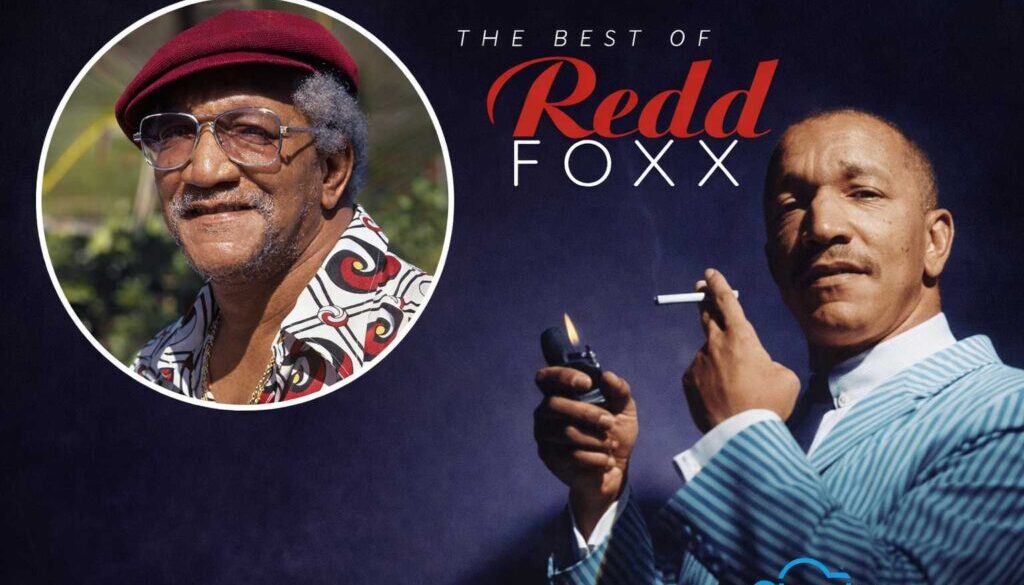
John E Sanford: All You Need To Know About Betty Jean Harris’s Ex-Husband
John E Sanford, better known to the world as Redd Foxx, was one of the most groundbreaking comedians America has ever produced. Born in St. Louis and raised in Chicago, he built a career from nothing, performing in clubs, cutting comedy records, and eventually landing one of the most beloved roles in television history. His journey from poverty to stardom is as entertaining as any performance he ever gave.What made Redd Foxx special was not just his humor. It was his honesty. He talked about real life, real struggle, and real people in a way that felt personal and immediate. At a time when most Black entertainers were expected to be polished and non-threatening, Foxx leaned into bold, unfiltered comedy that spoke directly to working-class audiences who had never seen themselves represented on stage quite like that.
His impact on American comedy is impossible to overstate. He opened doors for generations of comedians, inspired some of the biggest names in the industry, and brought Black family life into American living rooms every Friday night through his sitcom. Long after his passing in 1991, his influence can still be felt in stand-up comedy, television writing, and the careers of entertainers who grew up watching him work.
Quick Bio: John E Sanford
| Category | Details |
|---|---|
| Full Name | John Elroy Sanford (John E Sanford) |
| Stage Name | Redd Foxx |
| Date of Birth | December 9, 1922 |
| Place of Birth | St. Louis, Missouri, USA |
| Date of Death | October 11, 1991 |
| Age at Death | 68 years |
| Nationality | American |
| Profession | Comedian, Actor, Entertainer |
| Known For | Stand-up comedy, Party Records, Sanford and Son |
| Famous TV Show | Sanford and Son (1972–1977) |
| Breakthrough | Comedy albums (“party records”) in the 1950s–60s |
| Early Life | Raised in Chicago after family hardship and father’s absence |
| Education | DuSable High School, Chicago (dropped out as teenager) |
| Career Start | Harlem clubs in the 1940s performing comedy and music |
| Comedy Style | Bold, raw, observational, adult-themed humor |
| Notable Albums | 50+ comedy party records |
| Other TV Shows | The Redd Foxx Show, The Royal Family |
| Awards | Golden Globe Award for Sanford and Son |
| Financial Issues | Bankruptcy in 1983; IRS debt later in life |
| First Wife | Evelyn Killebrew (1948–1951) |
| Second Wife | Betty Jean Harris (1956–1975) |
| Third Wife | Ka Ho Cho (1991 – married shortly before his death) |
| Fourth Wife | Joi Yun Chi Lin (brief marriage in later life; records vary in biographies) |
| Children | Adopted stepdaughter: Debreca Sanford |
| Legacy | Pioneer of modern stand-up comedy influencing generations |
| Influenced Artists | Eddie Murphy, Richard Pryor, Chris Rock, Bernie Mac, Jamie Foxx |
| Final Resting Place | Las Vegas, Nevada, USA |
Early Life & Childhood
John E Sanford came into the world on December 9, 1922, in St. Louis, Missouri. He was born into a working-class family that faced hardship from the very beginning. His father, Fred Glenn Sanford, worked as an electrician and served in the U.S. Army during World War I, but he eventually abandoned the family when John was just a young child. That early loss shaped the way Redd Foxx saw the world for the rest of his life.
After his father left, his mother Mary Alma Hughes Sanford struggled to keep the family together. She was part Seminole and a resilient woman who did her best in difficult circumstances. For stretches of time, young John lived with his grandmother in St. Louis while his mother looked for work elsewhere. It was a childhood marked by instability, but those experiences gave him a raw understanding of life that would later fuel his comedy in very real ways.
Eventually, the family settled in Chicago on the South Side, one of the most vibrant African American communities in the country at the time. It was a neighborhood full of music, culture, and tough love. Growing up there, John was surrounded by the kind of characters and stories that would later populate his comedy routines. The South Side shaped his voice and gave him material that no comedy school ever could.
Teen Years & The Move to New York
As a teenager in Chicago, John attended DuSable High School, a school that punched well above its weight in producing influential alumni. One of his classmates was Harold Washington, who would go on to become the first Black mayor of Chicago. John was bright and funny, always drawing attention in any room he walked into. But formal education was never quite the right fit for someone who learned best by living, watching, and performing.
At around the age of sixteen, he dropped out of school and joined a musical group called the Four Bon Bons. The group decided to try their luck in New York City, specifically in Harlem, which was the heartbeat of Black culture and entertainment in America. That move changed everything. New York was loud, competitive, and full of opportunity for someone with enough talent and nerve to grab it. Young John had plenty of both.
Living in Harlem during those early years, he worked a variety of odd jobs to survive, including washing dishes at a restaurant called Jimmy’s Chicken Shack. It was there that he crossed paths with a fellow dishwasher named Malcolm Little, who the world would later know as Malcolm X. Both men had reddish hair, which earned John the nickname “Chicago Red.” That friendship became a small but fascinating footnote in American cultural history, with Malcolm X later writing about Foxx warmly in his autobiography.
“The funniest dishwasher on this earth.”
Malcolm X, referring to Redd Foxx in his autobiography
The Making of “Redd Foxx”
When John E Sanford decided to build a stage persona, he needed a name that stood out. The “Redd” came naturally from his nickname “Chicago Red,” a reference to his reddish complexion and hair. The “Foxx” was borrowed from Jimmie Foxx, the legendary baseball slugger known for his power and dominance. Together, the name had a punchy, memorable quality that fit a performer who was anything but ordinary.
Choosing that stage name was more than just a branding decision. It was a statement. Redd Foxx was not going to be a polished, safe entertainer. He was going to be sharp, bold, and himself. The name carried attitude, and so did the man behind it. From the moment he started performing under that name, audiences knew they were going to get something honest, something a little dangerous, and something genuinely funny.
Over time, the name Redd Foxx became bigger than John E Sanford ever could have imagined. It appeared on comedy albums, nightclub marquees, television screens, and eventually in the history books of American entertainment. But to his family, close friends, and people who knew him from the early days, he was still simply John, a kid from Chicago who refused to let a hard start stop him from reaching the top.
Early Comedy Career
Redd Foxx started performing comedy in the clubs and venues of Harlem during the 1940s. It was not an easy path. The entertainment world was deeply segregated, and Black comedians had limited access to the big mainstream stages. But Foxx found his audience in the theaters, bars, and social clubs that served the Black community. He was raw, relatable, and wickedly funny, and word spread quickly that this guy was something special.
His big break on a larger stage came through a chain of events connected to singer Dinah Washington. She had caught his act and was so impressed that she personally pushed for him to be seen in Los Angeles. When Dootsie Williams of Dootone Records caught his performance at the Brass Rail nightclub in Los Angeles, it opened the door to his first recording deal. That moment launched the next chapter of his career in a very big way.
Foxx became one of the first Black comics to perform for White audiences on the Las Vegas Strip, a distinction that speaks to both his talent and his determination to push past the boundaries that existed around him. Las Vegas in that era was tough terrain for Black entertainers, but Foxx carved out a space through sheer force of personality. The crowds loved him, and his reputation began to grow far beyond the neighborhoods and clubs where he had first found his footing.
The Party Records Era
Before television made him a household name, Redd Foxx built a massive underground following through his comedy albums. These records, often called “party records” because of their adult humor and unfiltered language, were enormously popular in Black households across America throughout the 1950s and 1960s. They were the kind of albums people passed around, played at gatherings, and quoted among friends. Foxx recorded more than fifty of them over his career, earning him the unofficial title “King of the Party Records.”
These albums were not distributed through mainstream channels. They were sold out of trunks, in barbershops, and through word of mouth. Yet they sold in huge numbers. Foxx was speaking to an audience that mainstream entertainment had largely ignored, an audience that appreciated being spoken to honestly, without sugarcoating or censorship. His comedy on those records was observational, personal, and rooted in everyday Black American life in a way that felt genuinely revolutionary for its time.
The party records also served as a training ground for Foxx as a performer. Over dozens of albums spanning years, he refined his timing, developed his characters, and built a library of material that was essentially a long master class in comedy. By the time television producers came calling, he was not just a funny guy. He was a seasoned professional with decades of performance behind him, which is exactly why his transition to the small screen looked so effortless when it finally happened.
Career Milestone Snapshot
Performed on the Major Bowes Amateur Hour as part of the Jump Swinging Six at age 16
Recorded early songs, beginning his professional entertainment career
Released 50+ party records, earning the title “King of the Party Records”
Sanford and Son premieres on NBC, becoming a top-rated television show
Left Sanford and Son after six seasons; signed the richest TV contract of the era
Joined The Royal Family on CBS alongside longtime friend Della Reese
Passed away on October 11 from heart failure, aged 68
Ranked #24 on Comedy Central’s 100 Greatest Stand-Ups of All Time
Sanford and Son: The Role That Changed Everything
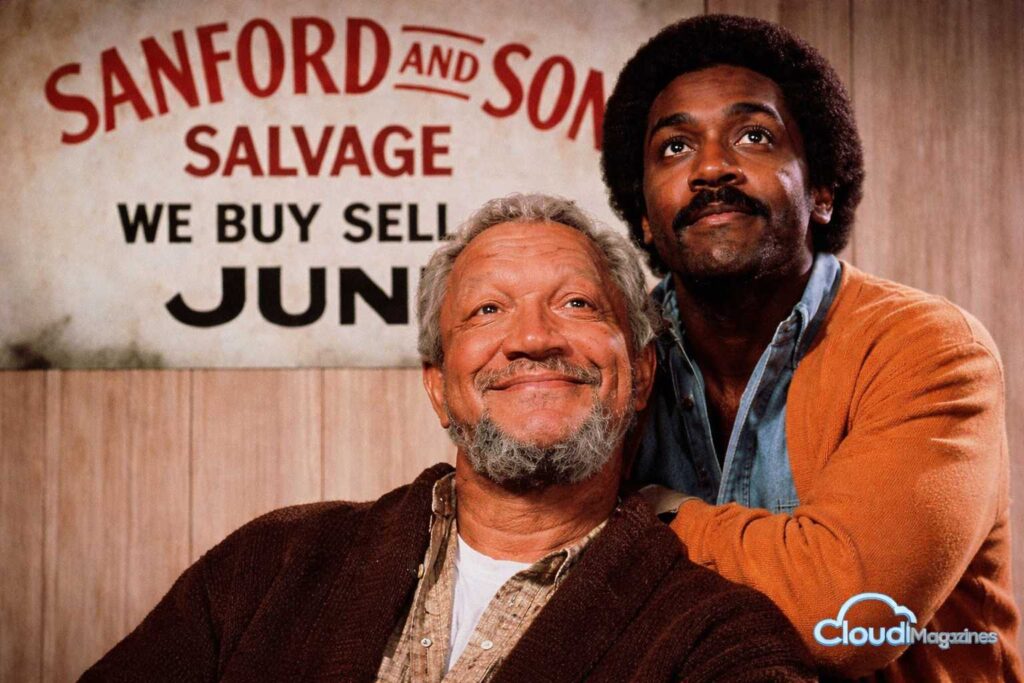
When Sanford and Son premiered on NBC on January 14, 1972, nobody quite knew what to expect. The show was adapted from a British sitcom called Steptoe and Son, but in Redd Foxx’s hands it became something entirely its own. He played Fred G. Sanford, a cantankerous junkyard dealer in the Watts area of Los Angeles, opposite Demond Wilson as his long-suffering son Lamont. The chemistry between them was instant, warm, and genuinely funny. Audiences connected with it immediately.
The show was unlike almost anything else on American television at the time. It centered Black characters in a realistic, working-class setting without making their Blackness a punchline or an issue. The humor came from the relationship, the situations, and the remarkable comedic instincts of its lead actor. Foxx’s experience doing stand-up allowed him to improvise and play to the live studio audience in ways that made each episode feel spontaneous and alive. His fake heart attacks, a running gag throughout the series, became one of the most recognized bits in sitcom history.
Sanford and Son climbed to become the second highest-rated show on television by its second season, an achievement that speaks volumes given the competitive landscape of 1970s network TV. Foxx won a Golden Globe for his performance, a recognition that was long overdue for someone of his talent and experience. The show ran for six seasons and, even decades later, remains one of the most beloved sitcoms in American television history. It proved, definitively, that a show built around Black characters and Black humor could be universally beloved.
Personal Life & Marriages
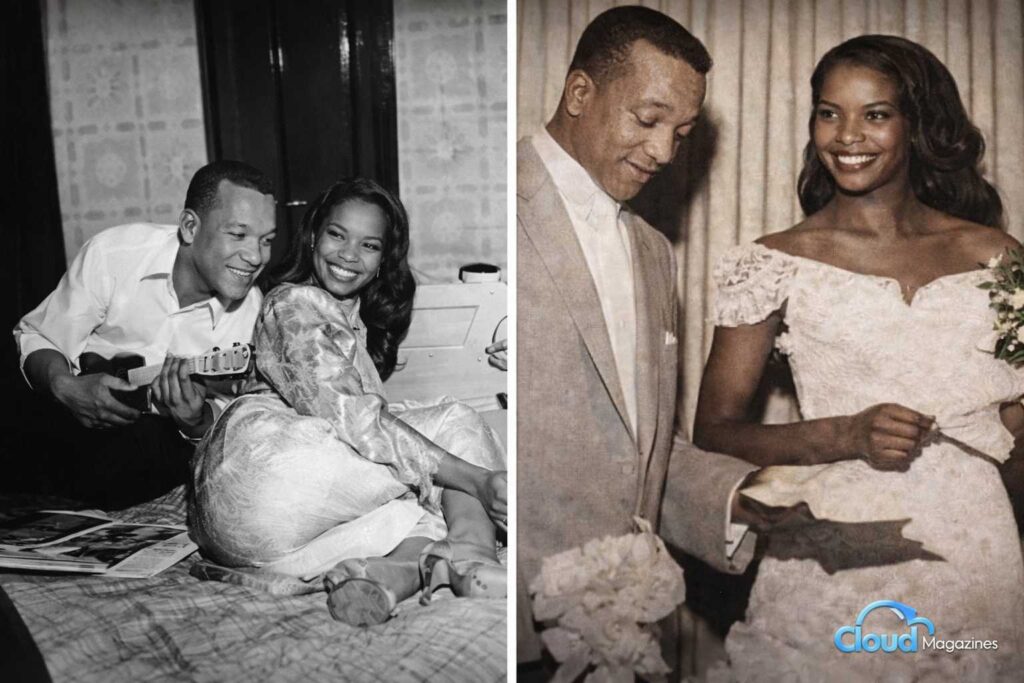
Redd Foxx was married four times throughout his life, a personal history that reflected both his passionate nature and the difficulties of maintaining relationships while building a demanding career in entertainment. His first marriage was to Evelyn Killebrew in 1948, but the union was short-lived and ended in divorce by 1951. He was still a young man trying to find his footing in the entertainment world, and the pressures of that life made stability difficult to maintain.
His second marriage, to Betty Jean Harris in 1956, lasted significantly longer. Betty Jean was a showgirl and dancer, and the couple shared nearly two decades together before divorcing in 1975. During that marriage, Foxx adopted Betty’s daughter Debreca, who took on his stage surname. That adoption showed a side of Foxx that his public persona did not always highlight, a man capable of deep personal commitment and genuine family love, even when life on the road and in the spotlight made things complicated.
Foxx married twice more in his later years, reflecting a lifelong desire for companionship and partnership. Throughout his personal struggles, including serious financial difficulties and health issues in his later years, he remained a loyal friend to many of his colleagues. He was known for using his platform and his influence to help other Black performers get work, a generosity that was genuine and consistent throughout his career. His personal life was imperfect, but his heart for the people around him was rarely in question.
Later Career & Personal Struggles
After leaving Sanford and Son in 1977, Foxx signed what was reported to be the richest contract in television history at the time, a deal for a variety show on ABC. The show initially drew strong ratings, but it could not sustain its audience and was cancelled after its first season. It was a significant professional disappointment for someone who had just walked away from a guaranteed hit to pursue a new creative direction. The setback marked the beginning of a difficult stretch in his professional life.
Throughout the 1980s, Foxx faced serious financial problems. He had always been known for his generosity and his free-spending approach to money, and those habits caught up with him badly. He owed enormous sums to the IRS and filed for bankruptcy in 1983. The public spectacle of his financial troubles was painful, particularly for a man who had worked so hard to reach the heights he had achieved. He never fully resolved those debts, which followed him until the very end of his life.
In 1986, he returned to television with The Redd Foxx Show on ABC, but it struggled with ratings and was cancelled after just a few months. Despite those setbacks, Foxx kept working. He returned to stand-up, remained active in Las Vegas, and in 1990 landed what seemed like a genuine second act with The Royal Family on CBS, a warm sitcom that reunited him with his longtime friend Della Reese. It looked like Redd Foxx was truly back. Then tragedy struck before the comeback could fully unfold.
Final Days & Death
On October 11, 1991, while rehearsing on the set of The Royal Family, Redd Foxx collapsed from a massive heart attack. His co-stars and crew members initially thought he might be doing one of his famous fake heart attacks, the bit he had performed hundreds of times on Sanford and Son. But it quickly became clear that this was very real. He was rushed to a nearby hospital in Los Angeles, where he was pronounced dead later that evening. He was 68 years old.
The news hit the entertainment world hard. Fellow comedians, actors, and fans around the country mourned the loss of someone who had been a constant presence in American comedy for decades. Eddie Murphy, Richard Pryor, and many others who had cited Foxx as a major influence spoke openly about what his work had meant to them. The outpouring of grief reflected just how deeply he had connected with people over the course of a remarkable fifty-year career in entertainment.
At the time of his death, Foxx still owed millions of dollars to the IRS, a financial reality that underscored the gap between the glamour of his public life and the complicated truth of what he had faced behind the scenes. He was buried in Las Vegas, a city where he had spent so much of his career entertaining audiences. His death was a genuine loss, not just for comedy, but for American culture as a whole. The world became a little less funny on October 11, 1991.
He used his stardom as a stage to lift others. That generosity, more than any single performance, is what defined the man behind the laughter.
Legacy, Influence & Cultural Impact
More than three decades after his death, the legacy of Redd Foxx remains enormous. He was one of the first Black comedians to cross over to White mainstream audiences in a meaningful way, doing so not by softening his material but by being brilliantly funny on his own terms. That path he carved made it possible for every comedian who came after him to be a little more honest, a little more themselves, and a little less concerned with fitting into a mold that was never designed for them.
The comedians who name Redd Foxx as an influence read like a who’s who of American comedy. Eddie Murphy, Chris Rock, Bernie Mac, and Richard Pryor all pointed to Foxx as someone who showed them what was possible. Jamie Foxx went so far as to adopt a version of his name as a tribute. That kind of influence, the kind that shows up in the careers of the people who actually changed the art form, is about as meaningful a legacy as anyone in entertainment can leave behind.
In 2004, Comedy Central ranked Redd Foxx at number 24 on its list of the 100 Greatest Stand-Ups of All Time, a recognition that placed him in elite company. Sanford and Son continues to air in reruns and remains one of the most-watched classic sitcoms among new generations of viewers. His comedy albums, once sold out of car trunks and barbershops, are now studied as artifacts of American cultural history. John E Sanford, the kid from St. Louis who never stopped being himself, turned out to be one of the most important entertainers of the twentieth century.
Why John E. Sanford Still Matters in 2026
In 2026, conversations about representation in media, the value of authentic storytelling, and the power of comedy as a vehicle for truth are more relevant than ever. Redd Foxx was ahead of all of those conversations. He understood intuitively that people connect with what is real, that laughter is most powerful when it comes from a place of genuine human experience, and that an entertainer’s greatest gift is the willingness to be completely, unapologetically themselves on stage.
The story of John E. Sanford is not just a biography of a comedian. It is a story about resilience, about what it means to build something from nothing, and about the lasting power of art that refuses to compromise. He faced poverty, discrimination, professional setbacks, and personal heartbreak, and he kept performing, kept creating, and kept making people laugh. That is a story worth knowing, worth telling, and worth celebrating.
If you have never gone back and watched Sanford and Son from the beginning, or listened to one of his classic stand-up performances, this is the perfect invitation to do exactly that. Redd Foxx was a once-in-a-generation talent who left the world funnier, more honest, and more willing to look at itself clearly. That is a legacy that does not fade with time. It only grows more impressive the further we get from it.
Frequently Asked Questions (FAQs)
1. Who was Redd Foxx and why is he famous?
Redd Foxx, born John E Sanford, was a legendary American comedian and actor best known for his role as Fred Sanford on Sanford and Son. He gained fame for his bold, unfiltered comedy style and is considered a pioneer who helped shape modern stand-up comedy.
2. What made Redd Foxx’s comedy unique?
Redd Foxx stood out because of his raw, honest, and fearless humor. He spoke openly about real-life struggles, especially within working-class Black communities, at a time when such topics were rarely addressed on stage or television.
3. How did Redd Foxx start his career?
Redd Foxx began performing in clubs in Harlem during the 1940s. He later gained popularity through his “party records,” a series of comedy albums with adult humor that built him a strong underground fan base before his television success.
4. What was Redd Foxx’s biggest career breakthrough?
His biggest breakthrough came in 1972 with the hit sitcom Sanford and Son. The show became one of the top-rated programs in the U.S. and turned Foxx into a household name.
5. What is Redd Foxx’s legacy in comedy?
Redd Foxx is remembered as a trailblazer who influenced major comedians like Eddie Murphy, Richard Pryor, and Chris Rock. His work helped open doors for Black comedians and changed the direction of American comedy forever.
——————————–
Other Articles:
Who is Thomas Boone Quaid? All About the Life of Kimberly Buffington and Dennis Quaid’s Son
Kieran Lindsay Lieberthal: All About the Life of Keith Lieberthal and Julianna Margulies’s Son
Marta Regina Bergoglio: All You Need to Know About Pope Francis’s Sister
Who is Cheryl Johnson-LaVine? All About the Life of Zach LaVine’ Father
Who Is Amy Sherrill? All About The Life of Tim Duncan’s Ex-Wife