
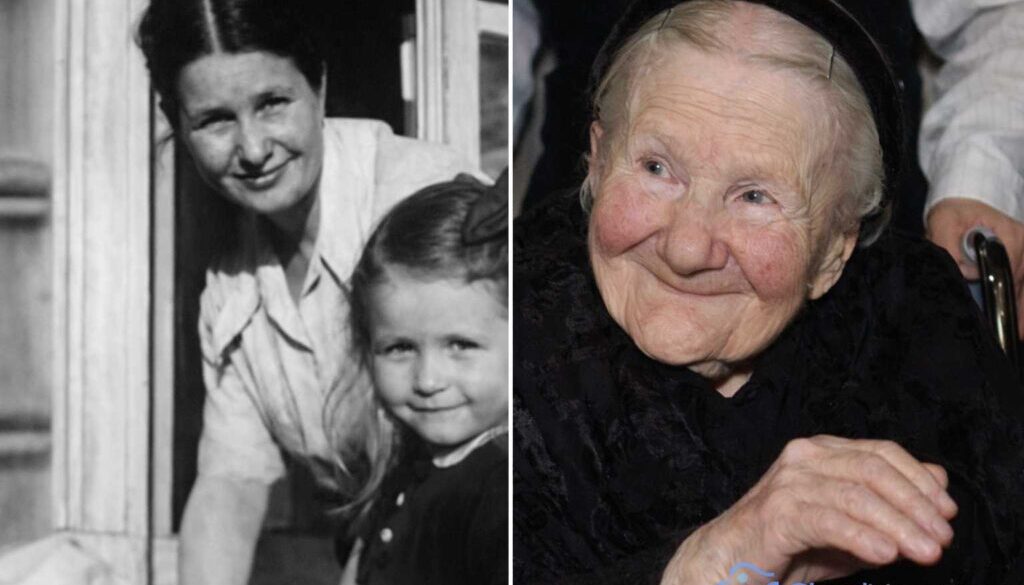
Irena Krzyzanowska: All About The Life Of Mieczysław Sendler’s Wife
Irena Krzyzanowska was a Polish social worker, humanitarian, and underground resistance member who became one of the most courageous figures of World War II. Born in 1910 in Warsaw, she is best remembered by her married name, Irena Sendler. Her story is one of quiet, extraordinary bravery that the world took decades to fully discover.
At a time when helping a Jewish person in occupied Poland meant certain death, Irena chose to act anyway. She used her professional position to enter the sealed Warsaw Ghetto, smuggling out children one by one and giving them a chance at life. The scale of what she accomplished is staggering. She helped rescue approximately 2,500 Jewish children from near-certain death at the hands of Nazi Germany.
What makes her story even more remarkable is how long it remained in the shadows. For much of the second half of the twentieth century, Irena Krzyzanowska lived quietly in Poland, largely unknown outside her own country. It was only in the late 1990s and early 2000s that her story reached a global audience, earning her the recognition she so richly deserved before her death in 2008.
Today, her name stands as a symbol of moral courage, compassion, and the power of one individual to make a difference. She never called herself a hero. In fact, she often said she wished she had done more. That kind of humility, combined with what she actually accomplished, is what makes Irena Krzyzanowska truly unforgettable.
Quick Bio: Irena Krzyzanowska
| Category | Details |
|---|---|
| Full Name | Irena Stanisława Krzyżanowska Sendler |
| Known As | Irena Sendler |
| Birth Date | February 15, 1910 |
| Birth Place | Warsaw, Poland |
| Death Date | May 12, 2008 |
| Death Place | Warsaw, Poland |
| Age at Death | 98 Years |
| Nationality | Polish |
| Occupation | Social Worker, Humanitarian, Resistance Member |
| Famous For | Rescuing approximately 2,500 Jewish children during WWII |
| Parents | Dr. Stanisław Henryk Krzyżanowski, Janina Krzyżanowska |
| Father’s Profession | Physician and social activist |
| Education | University of Warsaw (Law and Polish Literature) |
| Early Career | Warsaw Department of Social Welfare (from 1935) |
| Resistance Role | Member of Żegota (Council to Aid Jews) |
| Codename | “Jolanta” |
| WWII Activity | Smuggling Jewish children out of the Warsaw Ghetto |
| Estimated Lives Saved | Approximately 2,500 children |
| Arrest | October 20, 1943 by Gestapo |
| Torture | Severely tortured; legs and feet broken |
| Death Sentence | Sentenced to death but escaped execution |
| Post-War Work | Social services, orphanages, elderly care |
| First Marriage | Mieczysław Sendler (1931–1947), separated after WWII; he was a university academic and POW during the war |
| Second Marriage | Stefan Zgrzembski (born Adam Celnikier), Jewish survivor of WWII; they had three children (Janina, Andrzej who died in infancy, and Adam); marriage ended in 1957 |
| Third Marriage | Reunited and remarried first husband Mieczysław Sendler after 1961; marriage lasted until final divorce around 1971 |
| International Recognition | Righteous Among the Nations (1965) |
| Major Awards | Order of the White Eagle (2003), Jan Karski Award |
| Honorary Citizenship | Israel (1991) |
| Nobel Nomination | Peace Prize nominee (2007) |
| Legacy | Global symbol of courage, humanity, and resistance |
| Burial Place | Powązki Cemetery, Warsaw |
| Notable Quote | “I could have done more…” |
Her Parents: Stanisław and Janina Krzyżanowski
Irena’s father, Dr. Stanisław Henryk Krzyżanowski, was far more than just a physician. He was a deeply principled man who co-founded the Polish Socialist Party and believed passionately in equality, universal healthcare, and human dignity. He was known in his community not just for his medical skills but for his willingness to treat the poor and the marginalized, including Jewish patients, without charging a fee.
Stanisław ran a sanatorium in the town of Otwock, about fifteen miles from Warsaw, where the local population was nearly half Jewish. While other doctors in the area turned away patients who could not pay, he opened his doors to everyone. “If someone else is drowning, you have to give a hand,” he would say. Those words stayed with Irena for the rest of her life and became the foundation of everything she later did.
Tragically, Stanisław Krzyżanowski died in February 1917 from typhus, a disease he contracted while treating patients that his colleagues refused to touch. Irena was only six years old. His death left the family without its main provider, but it also left Irena with something far more powerful: a deep, lifelong commitment to helping others regardless of the personal cost. His example never faded from her memory.
Irena’s mother, Janina Krzyżanowska (née Grzybowska), was a strong and dignified woman who shared her husband’s values. She raised Irena largely on her own after Stanisław’s death, first moving to Tarczyn and later to Piotrków Trybunalski. Janina was also a member of the Polish Socialist Party. After her husband died, the Jewish community of Otwock offered financial help to cover Irena’s education as a gesture of gratitude. Janina, though moved by the offer, declined with quiet grace and raised her daughter with both independence and deep moral clarity.
Growing Up: Education and Early Beliefs
Irena Krzyzanowska grew up between two worlds. She experienced the warmth and moral seriousness of her father’s household and then faced the hardship of growing up without him. After his death, she and her mother moved around Poland, eventually settling in places where Irena received her schooling. She attended the Helena Trzcinska Gymnasium and completed her final school exams in 1927.
From there, she enrolled at the University of Warsaw, initially studying law before switching to Polish literature. She was a sharp, socially aware student who quickly became involved in progressive causes. She actively opposed the “ghetto bench” system that many Polish universities enforced in the 1930s, a discriminatory practice forcing Jewish students to sit in segregated areas. Irena publicly refused to accept this and defaced her own student grade card in protest, which led to her suspension from university for three years.
Her willingness to suffer consequences for standing up for others was not a coincidence. It was the natural expression of everything her father had taught her. Even as a young woman, she understood that staying silent in the face of injustice was its own kind of wrong. She joined the Union of Polish Democratic Youth and became involved in the Polish Socialist Party, continuing the tradition of both her parents before her.
By the time Irena completed her studies and began her career as a social worker in the early 1930s, she had already formed the values that would define her life. She began working at the Free Polish University in 1932 and moved into the Warsaw Department of Social Welfare and Public Health in 1935. That position, seemingly ordinary at the time, would later become her most important tool for saving thousands of lives.
Irena’s Three Marriages: Love, War, and Reunion
Irena Krzyzanowska’s personal life was shaped by love, war, loss, and a remarkable capacity for second chances. She was married three times during her life, each relationship reflecting a very different chapter of her extraordinary story. Despite the complexity of her marital history, she remained known by her first married name, Sendler, for the rest of her life.
First Marriage: Mieczysław Sendler
Irena married Mieczysław Sendler in 1931. He was an academic working as an assistant in the Department of Classical Philology at the University of Warsaw. Their early years together were hopeful and ordinary. When Germany invaded Poland in September 1939, Mieczysław was called up for military service, captured as a prisoner of war, and spent five and a half years in a German POW camp in Woldenberg. By the time he returned in 1945, both had changed deeply. They divorced in 1947, but Irena kept his surname for the rest of her life.
Second Marriage: Stefan Zgrzembski
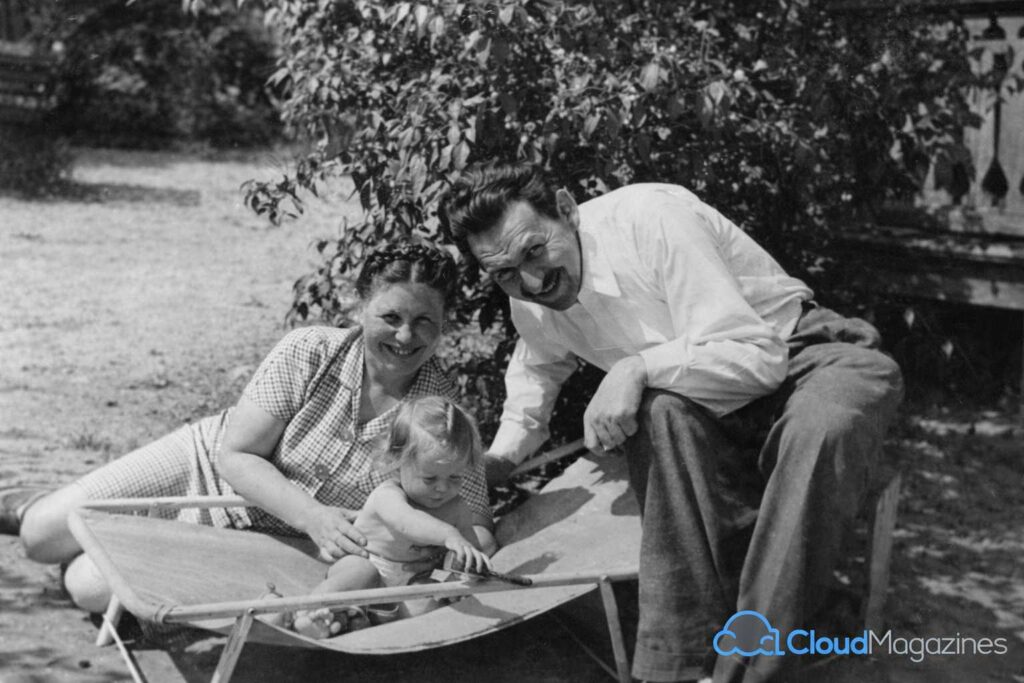
After her first divorce, Irena married Stefan Zgrzembski, whose birth name was Adam Celnikier. He was a Jewish man she had known during the war and had personally helped and sheltered during the Warsaw Uprising. Their connection was forged in one of history’s darkest moments. Together they had three children: a daughter named Janina, a son named Andrzej who died in infancy, and a son named Adam. Stefan left the family in 1957 and passed away in 1961.
Third Marriage: Mieczysław Sendler (Reunion)
After Stefan’s death in 1961, Irena made an unexpected and deeply human decision: she reunited with her first husband, Mieczysław Sendler. They remarried and spent another decade together. The reconciliation ultimately did not last, and they divorced for the second and final time around 1971. Irena spent the remaining decades of her life as a widow, raising her surviving children and eventually becoming a globally celebrated figure.
Through all three marriages, Irena never stopped working. She raised her family while continuing her social work and living quietly in Warsaw. Her daughter Janina survived her and was still living in Warsaw at the time of Irena’s death in 2008. Her son Adam passed away in 1999, on the very same day that the “Life in a Jar” school project about Irena’s story was launched in Kansas, United States.
Inside the Warsaw Ghetto: The Rescue Operation
When Germany invaded Poland on September 1, 1939, Irena Krzyzanowska was twenty-nine years old and working as a senior administrator for the Warsaw Social Welfare Department. Almost immediately, Nazi authorities ordered Jewish employees removed from the department and barred it from helping Warsaw’s Jewish residents. Rather than comply, Irena began quietly working around these rules, registering Jewish families under false Polish names so they could still receive food, clothing, and financial support.
By 1940, the Nazis had sealed off a portion of Warsaw into what became the Warsaw Ghetto, forcing over 400,000 Jewish people into an area the size of New York’s Central Park. Disease, starvation, and brutal conditions killed thousands every month. Irena used her role at the Social Welfare Department to obtain an official pass allowing her to enter the ghetto under the pretense of conducting sanitary inspections and checking for signs of typhus. She went in daily, sometimes multiple times, carrying food, medicine, and money, and smuggling children out.
The methods she used were inventive and desperately dangerous. Infants were sedated and hidden inside toolboxes, suitcases, potato sacks, and even coffins. Older children were smuggled through underground tunnels, sewers, and secret passages in churches and courthouses that sat along the ghetto boundary. Ambulances carried children hidden beneath stretchers. Every mission carried the risk of death for Irena, the children, the families hiding them, and every member of her network. The courage required was almost unimaginable.
In August 1943, Irena formally joined Zegota, the Polish Council to Aid Jews, and became the head of its Children’s Division. Under her underground name “Jolanta,” she coordinated a broad network of volunteers, mostly women, who placed rescued children with willing Polish families, convents, orphanages, and schools. For each child she saved, she recorded their real name and new identity on thin strips of paper, which she kept hidden in glass jars buried under an apple tree in a friend’s garden. Her plan was always to use these records to reunite the children with their families once the war ended.
“Let me stress most emphatically that we who were rescuing children are not some kind of heroes. Indeed, that term irritates me greatly. The opposite is true. I continue to have pangs of conscience that I did so little.”
Captured by the Gestapo: Torture and Survival
On October 20, 1943, the Gestapo came to Irena’s door in the middle of the night. Her cover had been compromised after a woman connected to the resistance was captured and tortured into revealing names. Irena was arrested, beaten, and taken to Pawiak Prison, one of the most feared facilities in occupied Warsaw. Most people brought to Pawiak never walked out alive.
During her time there, Irena was subjected to intense interrogation and severe physical torture. The Gestapo broke her legs and crushed her feet in an attempt to force her to reveal the identities of the hidden children, their locations, and the names of her fellow resistance members. She said nothing. Not one name. Not one address. Despite unbearable agony, she protected every child and every co-conspirator, knowing that a single word could result in mass death.
She was sentenced to death. It seemed all but certain that Irena Krzyzanowska would not survive the war. But in a dramatic turn, Zegota activists managed to bribe a Gestapo officer shortly before her scheduled execution. She was listed as dead on official Nazi records but was quietly released. The torture left her with permanent physical injuries. She walked with difficulty for the rest of her life because of the damage done to her legs and feet.
Even after her escape, she did not stop. She continued to lead the Children’s Division of Zegota from the underground, living under an assumed identity and moving residences frequently to avoid capture. The demands of her secret life were so consuming that she was unable to attend her own mother’s funeral. The war had taken nearly everything from her, and still she kept going.
Post-War Life: Hope, Hardship, and Quiet Work
When the war finally ended in 1945, Irena immediately turned to the jars. She dug up the glass containers buried in her friend’s garden and used the coded records inside to begin locating the children she had saved and reconnecting them with any surviving family members. The task was heartbreaking. The Holocaust had devastated Jewish families across Poland. For most rescued children, their parents and relatives had been murdered in the death camps. The children had new names and in many cases had no memory of who they once were.
Despite the grief, Irena continued her work as a social worker in post-war Poland. She helped establish homes for elderly people, created orphanages, and worked in emergency services for children. She also became a target of suspicion during the communist era in Poland. In the late 1940s and early 1950s, she was investigated and harassed by communist authorities who viewed her wartime connections with suspicion. She lost her job for a period and faced serious professional and personal difficulties as a result.
For the next few decades, Irena lived in Warsaw, quietly and largely out of the international public eye. She did receive recognition from Yad Vashem in 1965, when Israel honored her as one of the Righteous Among the Nations. She traveled to Jerusalem in 1983 to plant her tree on the Avenue of the Righteous at Yad Vashem, and in 1991 she became an honorary citizen of Israel. These were meaningful honors, but widespread global recognition had not yet come.
Through the 1970s, 1980s, and 1990s, Irena continued living in Warsaw as a retired social worker, admired by those who knew her story but not yet celebrated by the wider world. She was a woman who had saved 2,500 lives and yet remained, for decades, almost entirely unknown outside of Poland. That was about to change in a most unexpected way.
How the World Finally Discovered Her Story
In 1999, four high school students in Uniontown, Kansas, came across a brief mention of Irena Sendler in a 1994 news magazine clipping describing her as one of several people compared to Oskar Schindler. Curious, they began researching and found almost nothing online. Determined, they turned a school history project into something extraordinary. They wrote a play called “Life in a Jar,” named after the jars Irena had buried in the garden to protect her records.
Their teacher, Norman Conard, helped them reach out to Irena herself. She was in her late eighties, living in Warsaw, and was deeply moved to learn that young American students cared enough about her story to tell it. In 2001, the students traveled to Poland and met Irena in person. Their project began receiving media attention across the United States and beyond, and the world started asking: who is Irena Sendler? Within a few years, hundreds of thousands of web pages carried her name where once there had been almost none.
The honors that followed came quickly. Poland awarded her the Order of the White Eagle in 2003, the country’s highest civilian honor. That same year she received the Jan Karski Award for Valor and Courage. In 2007, she was nominated for the Nobel Peace Prize. She appeared on a Polish commemorative silver coin in 2008. A television film about her life, “The Courageous Heart of Irena Sendler,” was produced in 2009 with actress Anna Paquin portraying her in the title role.
Throughout all of this, Irena maintained the same humility she had always shown. She accepted the attention graciously but consistently redirected it toward the people who had helped her and toward the children who had suffered. She never stopped feeling that she could have done more. That quiet, persistent conscience was as much a part of her character as the courage that made her famous.
Recognition Received During Her Lifetime
- Righteous Among the Nations, Yad Vashem, Israel (1965)
- Tree planted on the Avenue of the Righteous at Yad Vashem, Jerusalem (1983)
- Honorary Citizenship of Israel (1991)
- Order of the White Eagle, Poland’s highest civilian honor (2003)
- Jan Karski Award for Valor and Courage (2003)
- Order of the Smile (Poland)
- Ecce Homo Order
- Commander’s Cross with Star of the Order of Polonia Restituta
- Medal of Merit for Healthcare (Poland)
- Golden Cross of Merit (Poland)
- Nobel Peace Prize Nomination (2007)
- Featured on a Polish commemorative silver coin (2008)
Beyond formal awards, Irena Krzyzanowska’s legacy lives in institutions, schools, streets, and memorial sites named in her honor across Poland and beyond. A statue was announced in Newark, Nottinghamshire, England, in 2021. Multiple biographies have been written about her life in several languages, and her story is taught in classrooms around the world as a lesson in what one person can accomplish when they choose courage over comfort.
Her Final Years and Passing in 2008
By the time Irena Krzyzanowska entered her nineties, her health had been declining for years. The injuries she suffered at the hands of the Gestapo during the war, particularly to her legs and feet, had never fully healed. She spent much of her final years in a care facility in Warsaw. Even so, she remained mentally alert and emotionally present for the recognition that continued to arrive from across the globe.
She received letters, visitors, delegations, and tributes from many corners of the world. She answered correspondence, gave interviews when her health allowed, and kept expressing gratitude for the attention while consistently pointing toward those who had helped her rather than claiming the spotlight for herself. The Kansas students remained in contact with her and continued performing their play in her honor. Their relationship with her became one of the most touching subplots within an already extraordinary life story.
Irena Stanisława Sendler, born Irena Krzyzanowska, passed away on May 12, 2008, in Warsaw, Poland. She was ninety-eight years old. She was buried at the Powązki Cemetery in Warsaw, one of the most historic and revered burial grounds in the country. Tributes poured in from across the world, from heads of state, from Holocaust survivors, from the descendants of children she had saved, and from ordinary people who had only recently learned her name.
She was survived by her daughter Janina and a granddaughter. Her death marked the end of a life that had spanned nearly a century and encompassed depths of both suffering and heroism that are almost impossible to fully comprehend. The values she lived by, compassion, courage, and a refusal to turn away from those in need, did not end with her. They were passed on through every story told in her name.
How the World Remembers Irena Krzyzanowska Today
In 2026, the legacy of Irena Krzyzanowska continues to grow steadily. Her story is taught in schools across Europe, North America, and beyond as part of Holocaust education and broader lessons in moral courage. The “Life in a Jar” theatrical project that first brought her international attention has been performed thousands of times across dozens of countries and continues to be staged by schools and community groups around the world.
Multiple books have been written about her life in several languages. Tilar J. Mazzeo’s “Irena’s Children,” published in 2016, brought fresh research and detail to her wartime activities and became widely used in educational settings. Anna Bikont’s “Sendler: In Hiding,” published in 2017, won the Ryszard Kapusciński Award for Literary Reportage in 2018 and remains one of the most deeply researched accounts of her life. Google celebrated what would have been her 110th birthday on February 15, 2020, with a Google Doodle viewed by millions.
In the world of film, Gal Gadot was announced to portray Irena in a forthcoming dramatic thriller written by Justine Juel Gillmer and produced by Pilot Wave. The project signals continued mainstream cultural interest in bringing her story to entirely new generations of audiences who may be encountering her name for the first time. The statue announced in Newark, Nottinghamshire, in 2021 further reflects the growing global effort to give her memory a permanent, visible form.
Perhaps the most lasting element of her legacy is biological. The 2,500 children she helped save grew into adults who built lives, married, and had children of their own. Their descendants are now spread across the world, many of them unaware that a woman named Irena Krzyzanowska made their existence possible. That is the truest and most enduring form of recognition: not a statue, not a film, not a school curriculum, but life itself continuing forward because one person chose not to look away.
Why Irena Krzyzanowska’s Story Still Matters
Irena Krzyzanowska did not set out to become a historical figure. She was a social worker, a daughter, a wife, and a mother who simply could not stand by while innocent people suffered. That refusal to accept injustice as someone else’s problem is what made her extraordinary. And it is also what makes her story deeply relevant to every generation that comes after her.
In an era when it can feel overwhelming to make a difference, Irena’s life is proof that individual action matters enormously. She worked with a small team of mostly ordinary women, using the tools they had at hand, under constant threat, and still managed to accomplish something that the full power of a Nazi occupation tried to prevent. The jars she buried in a garden became a metaphor for something profound: the act of preserving truth, even when the world wants to erase it.
Her story also teaches something important about recognition and delayed justice. For decades, Irena’s contribution was not widely known outside Poland. It took the curiosity of four teenagers in rural Kansas to ignite a global conversation about her legacy. That is a reminder that important truths can remain hidden for a long time, and that seeking them out and sharing them is its own act of courage worth honoring.
Irena Krzyzanowska, known to the world as Irena Sendler, was born on February 15, 1910, and died on May 12, 2008. In the span of those ninety-eight years, she lived through extraordinary times and made choices that saved thousands of lives. Her name deserves to be known not just as a piece of history but as a living reminder that one ordinary person, acting with compassion and determination, can change the world in ways that outlast any government, any war, and any attempt to silence the truth.
Frequently Asked Questions (FAQs)
1. Who was Irena Krzyzanowska (Irena Sendler)?
Irena Krzyzanowska was a Polish social worker and member of the resistance during World War II. She is best known for her courageous efforts in rescuing Jewish children from the Warsaw Ghetto under Nazi occupation.
2. How many children did Irena Sendler save during World War II?
She helped rescue approximately 2,500 Jewish children from the Warsaw Ghetto, arranging for their safe escape and placement with Polish families, orphanages, and religious institutions.
3. How did Irena Sendler rescue children from the Warsaw Ghetto?
She used her position in the Warsaw Social Welfare Department to enter the ghetto legally. Children were smuggled out in ambulances, suitcases, toolboxes, and through hidden routes like sewers and underground passages, while she coordinated a secret resistance network.
4. Was Irena Sendler ever captured by the Nazis?
Yes. In 1943, she was arrested by the Gestapo, tortured, and sentenced to death. However, she was later rescued by members of the resistance who bribed a German officer, allowing her to escape and continue her underground work.
5. When did Irena Sendler die and how is she remembered today?
She passed away on May 12, 2008, in Warsaw at the age of 98. Today, she is remembered worldwide as a symbol of courage and compassion, and her legacy is honored through books, films, memorials, and education programs.
——————————
Other Articles:
Who is Thomas Boone Quaid? All About the Life of Kimberly Buffington and Dennis Quaid’s Son
Kieran Lindsay Lieberthal: All About the Life of Keith Lieberthal and Julianna Margulies’s Son
Marta Regina Bergoglio: All You Need to Know About Pope Francis’s Sister
Nadia Farmiga: All You Need to Know About Taissa Farmiga and Vera Farmiga’s Sister
Jerome Jesse Berry: All About the Life of Halle Berry’ Father