
Attus Volans: The Tiny Spider With the Most Spectacular Dance in Nature
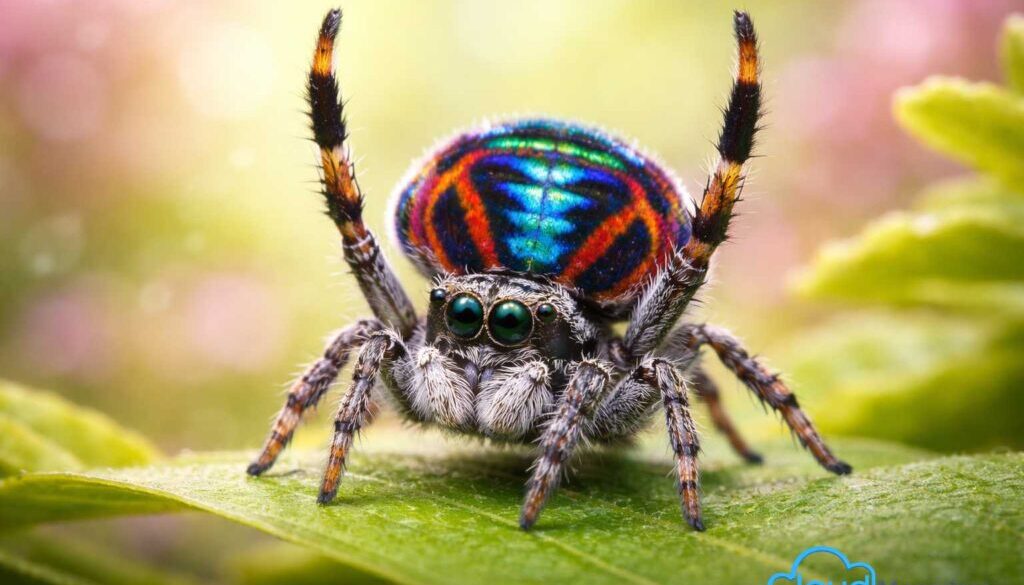
If you have ever seen a spider that looks like it belongs on a dance stage rather than a web, chances are you stumbled across Attus volans, today known as Maratus volans, the Peacock Spider. This tiny Australian jumping spider has captured the hearts of scientists, photographers, and nature lovers worldwide. Its breathtaking colors and fascinating courtship behavior make it one of the most talked-about spiders on the planet.
Despite being smaller than a fingernail, this little creature carries one of the most vivid personalities in the animal kingdom. From its rainbow-colored abdomen flaps to its elaborate mating rituals, Attus volans is living proof that nature saves some of its best work for the smallest creatures.
What Is Attus Volans?
Attus volans is the historical name for what modern science now calls Maratus volans, a species of jumping spider belonging to the family Salticidae. The name “Attus” was used in older taxonomic classifications before researchers reorganized the genus structure. Today, the spider is officially placed under the genus Maratus, commonly called the Peacock Spider group.
The species was first formally described in 1874 by British arachnologist Oktavius Pickard-Cambridge. At the time, it was given the species name volans, which is Latin for “flying,” based on early field reports that suggested the spider used its colorful abdominal flaps like wings. That claim was eventually proven incorrect, but the name stuck, and the spider’s legend only grew from there.
Physical Appearance: Small Body, Big Personality
One of the first things you notice about Attus volans is just how tiny it is. Adults typically measure between 4 and 5 millimeters in length, roughly the size of a small pencil eraser. Yet despite their miniature size, males of this species are covered in some of the most vivid colors found anywhere in the arachnid world.
Male Peacock Spiders display a stunning combination of red, blue, black, and orange on their abdomens. The most eye-catching feature is a pair of expandable flaps on the tip of the abdomen, lined with iridescent scales and framed with delicate white hairs. When extended, these flaps form a circular, fan-like display that genuinely resembles the tail of a peacock. Females, by contrast, are mostly brown and much more understated in appearance.
Both males and females share a body shape typical of jumping spiders: a compact, robust build, flat triangular head, and a set of large, forward-facing eyes that give them exceptional vision. Their eight eyes are arranged in rows, with the two large central eyes providing sharp, focused sight almost like a pair of binoculars built into their face.
Where Does Attus Volans Live?
Attus volans is native to Australia, with populations primarily recorded across Queensland, New South Wales, and Victoria. These spiders thrive in open, grassy woodlands and shrubby environments where they have plenty of ground-level vegetation to explore and hunt within.
These spiders do not build traditional webs to catch prey. Instead, they are active, ground-dwelling hunters that roam their habitat during daylight hours. Their preferred environments offer a mix of leaf litter, low shrubs, and open patches where they can both hunt effectively and carry out their elaborate courtship displays.
Vision: A Superpower in a Tiny Package
What makes Attus volans truly remarkable, beyond its colors, is its visual system. Jumping spiders in general are known for having some of the most advanced eyesight among all invertebrates, and the Peacock Spider is no exception.
Maratus volans can perceive the full visible light spectrum and can also detect ultraviolet light, a range invisible to the human eye. This UV sensitivity is believed to play a role in prey detection as well as in recognizing the colorful signals during courtship. Their large principal eyes can move independently within the eye socket, giving them a wide field of attention without even moving their heads.
This extraordinary visual ability is thought to have evolved primarily as a hunting adaptation, allowing these small predators to accurately judge distances and stalk prey with precision before launching a jump. The same visual sharpness also feeds into their complex social and mating behaviors.
The Famous Courtship Dance
If Attus volans is famous for anything, it is the courtship ritual of the male. This is perhaps one of the most visually impressive mating displays of any spider species on Earth, and it has made the Peacock Spider a viral sensation in the age of social media and wildlife photography.
When a male detects a female nearby, he begins his performance. He raises his abdomen upward and fans out his colorful flaps, creating a vivid circular display. At the same time, he waves his third pair of legs high in the air, vibrating them in rhythmic patterns. This full-body performance can last anywhere from four to fifty minutes, depending on the female’s response.
The courtship is not just visual. The male also produces subtle vibratory signals through his body movements, which the female can sense through the ground. Researchers have found that females respond more favorably to males who combine both strong visual displays and consistent vibratory signaling throughout the ritual.
Mating: High Stakes for the Male
The mating process of Attus volans is as dramatic as the courtship itself. If the female is receptive, she signals her interest by extending and moving one of her third legs in response. The male then slowly approaches, lowering his body close to the ground before initiating the final stages of the display.
However, the stakes are extremely high for the male. If the female is not interested and the male persists, she will attempt to attack, overpower, and consume him. This behavior, known as sexual cannibalism, is a genuine risk for the male at every stage of the process. Males must read the female’s signals carefully and be ready to jump away quickly if the situation turns dangerous.
Copulation, when it does occur, can last from several minutes to several hours. Females of this species are believed to mate only once during their lifetime, which may explain why they are so selective and why males have evolved such elaborate and energetically costly displays to win their attention.
Diet and Hunting Behavior
Attus volans is a carnivorous predator that feeds primarily on small insects and other spiders. As a cursorial hunter, meaning it hunts on the move rather than waiting in a web, it relies on its exceptional eyesight and agility to stalk and capture prey.
In natural settings, their diet includes small flies, ants, and other tiny arthropods that share their habitat. They are also known to be opportunistic and will take advantage of available food sources when their preferred prey is scarce. Their jumping ability, which can carry them several times their own body length, is their primary hunting tool.
- They stalk prey slowly and carefully before striking
- They use their front legs to sense and probe prey before biting
- Their venom is effective on small insects but completely harmless to humans
Life Cycle and Seasonal Activity
Attus volans follows a seasonal activity pattern closely tied to the Australian spring and early summer. Mature males typically emerge between August and December, which aligns with the warmer months of the Southern Hemisphere.
Females emerge slightly later than males and tend to survive longer into the season. By December, mated females begin creating small nests in the ground or beneath leaf litter, where they lay and guard their eggs. A single female can lay between 6 and 15 eggs per clutch, and some females are capable of producing multiple broods across a season.
The overall lifespan of Attus volans is approximately one year. Young spiders, called spiderlings, mature through a series of molts before reaching adulthood. Immature males lack the colorful abdominal flaps and specialized third legs of adults, only developing their full display features upon reaching sexual maturity.
The “Flying Spider” Myth
The species name volans meaning “flying” comes from an early and enduring myth. When specimens were first sent from Australia to England in the 1870s, accompanying notes described the spider as using its abdominal flaps like wings to extend its leaps, similar to a flying squirrel. Cambridge accepted this description and named the species accordingly.
For many decades, the flying story was repeated and assumed to be true. It was not until the early 2000s that researchers began seriously questioning whether the flaps actually functioned in aerial locomotion. Observations eventually confirmed that the flaps play no mechanical role in jumping distance or gliding, and serve purely as a visual courtship signal.
The myth was effectively laid to rest through a combination of direct field observations, high-speed photography, and controlled studies. It stands today as a charming reminder of how early naturalists sometimes accepted colorful field reports too readily.
Why Attus Volans Matters to Science
Beyond its visual appeal, Attus volans has become genuinely valuable to scientific research. Its mating system is a textbook example of runaway sexual selection, a process where female preferences drive males to develop increasingly elaborate traits over generations.
Researchers studying this species have gained broader insights into how multi-modal signaling (combining visual and vibratory cues) works in animal communication. The spider’s unique eye structure has also attracted interest from engineers and optical scientists who are working to understand how such precise vision is packed into such a tiny biological system.
Conservation-wise, Attus volans does not currently face serious threats, though like all wildlife it depends on healthy, undisturbed habitat. Its growing popularity as a subject of wildlife photography and citizen science has actually helped raise awareness of spider conservation more broadly.
Frequently Asked Questions (FAQs)
Q1: What is the difference between Attus volans and Maratus volans?
They refer to the same species. Attus volans is the older taxonomic name used in historical classifications, while Maratus volans is the currently accepted scientific name following modern revisions to spider genus groupings. Both names appear in the literature, but only Maratus volans is officially valid today.
Q2: Can Attus volans actually fly?
No. Despite the name volans meaning “flying,” this spider cannot fly. The colorful flaps on the male’s abdomen are used entirely for visual courtship displays to attract females. Early reports of them using the flaps like wings were based on misobservation and have since been thoroughly disproved.
Q3: Is the Peacock Spider venomous or dangerous to humans?
Attus volans does produce venom, as all spiders do, but it poses no danger to humans. The venom is effective only against the tiny insects it preys upon. These spiders are extremely small, non-aggressive toward people, and their bite, if it ever occurred, would be essentially harmless to a human.
Q4: Where can you find Attus volans in the wild?
This species is native to Australia, found mainly in Queensland, New South Wales, and Victoria. It prefers open grassy woodlands and shrubby areas with leaf litter and low vegetation. Sightings are most common during the Australian spring months between August and December.
Q5: How long does the Peacock Spider courtship dance last?
The male’s courtship display can last anywhere from four to fifty minutes depending on the female’s response. The dance involves raising and fanning the colorful abdominal flaps, waving the third pair of legs, and producing vibratory signals through the ground to attract and hold the female’s attention.
Q6: How big is Attus volans?
Adults measure approximately 4 to 5 millimeters in body length, making them very small even by spider standards. Despite this tiny size, the males are remarkably vivid in color and produce one of the most complex courtship performances found in the entire animal kingdom.
Final Thoughts
Attus volans, the Peacock Spider, is a perfect example of how the natural world never stops surprising us. In a creature barely large enough to sit on a fingertip, evolution has packed vivid color, extraordinary vision, a complex social life, and one of the most captivating dances in the animal kingdom.
Whether you are a biology student, a wildlife enthusiast, or simply someone who stumbled across a video of this tiny spider dancing, there is something universally delightful about Attus volans. It reminds us that some of nature’s greatest wonders come in the smallest packages.
——————–
Other Articles:
Multiple Severe Thunderstorm Alerts Issued for South Carolina Counties
Kuhl Car Alignment X Airforce Hydro Lifter
kaptenesia.com Proses Jelas Aman