Who Was Abram Zimmerman: All About the Life of Bob Dylan’s Father
Abram Zimmerman was an ordinary American man who lived an extraordinary life filled with hardship, resilience, and quiet dignity. Most people know him as the father of Bob Dylan, one of the greatest singer-songwriters in the history of American music. But Abram’s own story deserves to be told on its own terms, as a man who survived poverty, polio, and personal loss while building a life his family could be proud of.
Born in Duluth, Minnesota in 1911 to Jewish immigrant parents, Abram grew up learning the values of hard work and community from a very young age. He sold newspapers and shined shoes as a young boy to help his family make ends meet. Those early experiences taught him lessons about responsibility and perseverance that stayed with him for the rest of his life.
Abram was not a man of fame or fortune. He did not seek the spotlight and was never interested in celebrity. Instead, he built a modest life in the small town of Hibbing, Minnesota, where he ran a family appliance business, raised two sons, and contributed quietly to his local Jewish community. His story is deeply American in the best possible sense.
Today, Abram Zimmerman is remembered not just as Bob Dylan’s father but as a symbol of the immigrant generation that built modern America through sheer determination. His life offers a window into the Jewish immigrant experience of the early twentieth century and shows how a family’s roots can shape generations to come. His legacy, though humble, runs deeper than most people realize.
Quick Bio: Abram Zimmerman
| Category | Details |
|---|---|
| Full Name | Abram “Abe” Zimmerman |
| Born | October 19, 1911 |
| Died | May 29, 1968 (age 56 years), Duluth, MN |
| Birthplace | Duluth, Minnesota, USA |
| Cause of Death | Heart Attack |
| Age at Death | 56 years old |
| Spouse | Beatty Zimmerman (m. 1934) |
| Children | Bob Dylan, David Zimmerman |
| Parents | Zigman Zimmerman, Anna Zimmerman |
| Grandchildren | Jakob Dylan, Jesse Dylan, Anna Dylan, Sam Dylan |
| Great Grandchildren | Levi Dylan, James Dylan, Pablo Dylan, Feury Mae, William Dylan, Jonah Dylan |
| Occupation | Businessman, Appliance Store Owner |
| Religion | Jewish |
| Heritage | Eastern European Jewish |
| Buried | Tifereth Israel Cemetery, Minnesota |
Family Roots: From Odessa to the American Midwest
To understand Abram Zimmerman, you first need to understand where he came from. His parents, Zigman and Anna Zimmerman, were Jewish immigrants who fled Odessa in the Russian Empire, which is present-day Ukraine. They were escaping violent antisemitic pogroms that swept through the region in 1905, leaving thousands of Jewish families displaced, terrified, and desperate for safety.
Zigman Zimmerman arrived in Duluth, Minnesota around 1907, drawn there by a small but growing community of Jewish immigrants from Eastern Europe who had settled in the city. Duluth, a port town on the shores of Lake Superior, had a climate and landscape that reminded many Eastern Europeans of home. Zigman sent for his wife Anna and their children once he had established himself, and they arrived a few years later to begin their new American life together.
The Zimmerman family joined the Tifereth Israel synagogue in Duluth, which was a cornerstone of the city’s Russian Jewish community at the time. They kept traditional Jewish customs, celebrated Shabbat, and maintained close ties with other immigrant families who shared their background. Faith and community were not just traditions for the Zimmermans. They were survival tools in a new and unfamiliar country.
Abram was born into this world in 1911, the youngest son among the Zimmerman children. Growing up in a household shaped by the trauma of displacement and the hope of a better future gave Abram a particular kind of emotional depth. He learned early that life was not easy, that dignity came from hard work, and that family was the most important thing a person could hold onto. Those lessons would define everything he did as an adult.
Growing Up in Duluth: Childhood and Youth
Abram Zimmerman’s childhood in Duluth was shaped by the realities of immigrant life in early twentieth century America. The family did not have much money, and every member of the household was expected to contribute. Abram, like his siblings, started working at a very young age. By seven years old, he was out on the streets selling newspapers and shining shoes to help bring in a few extra cents for the family.
Despite the financial pressures, the Zimmerman household was filled with warmth and culture. Music played an important role in family life. Abram and his siblings were musical from a young age. He and his brother Jack both played violin, while their sister Marian played piano. Together they formed a little family band that performed at local high schools and community events, showing that even in modest circumstances, creativity found a way to bloom.
Abram was described by those who knew him as a quiet, thoughtful, and responsible young man. He was athletic as well as musical, with a genuine love for sports. He took his school years seriously and graduated from high school in 1929, the same year the American economy crashed into the Great Depression. That timing would shape his choices and challenges as a young adult entering a world that had very little room for the unprepared.
After finishing school, Abram found work with Standard Oil, which gave him a foothold in the working world. He was reliable, honest, and known for showing up and doing his job well. Those were not small qualities during the Depression years, when millions of Americans were struggling just to find any work at all. Abram understood that survival required consistency, and he brought that mindset to everything he took on throughout his life.
He never saw himself as anything more than a working man doing right by his family. And in that simplicity, there was a kind of greatness that his more famous son would spend decades trying to put into words.
Love, Marriage, and Building a Family
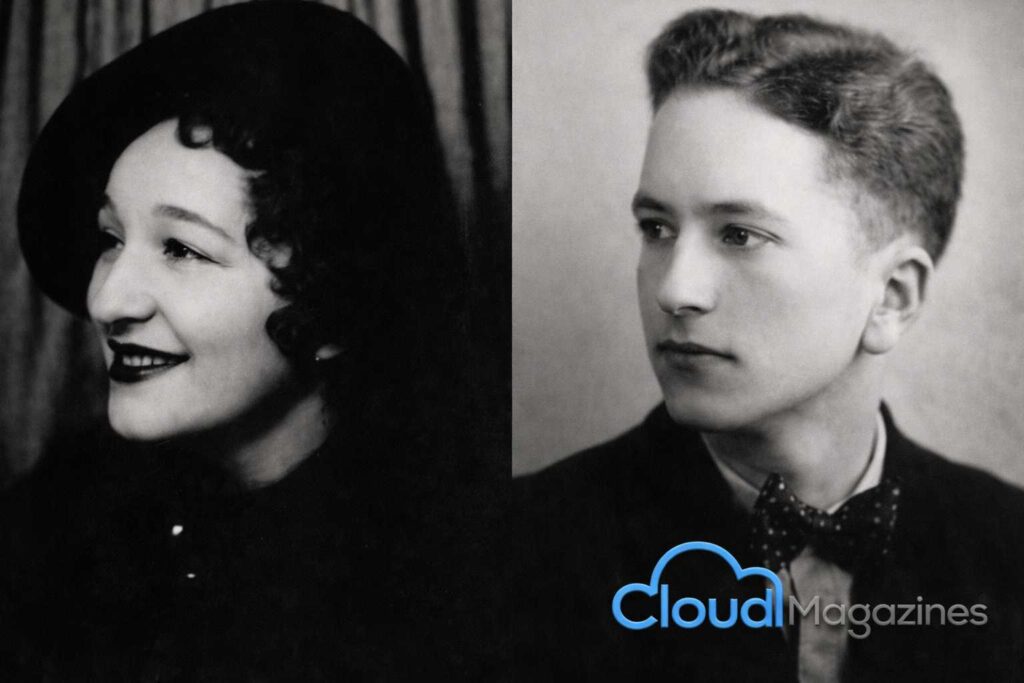
Abram Zimmerman met the woman who would become his wife at a New Year’s Eve party in Duluth at the end of 1931. She was Beatrice Ruth Stone, known to everyone as Beatty, a vivacious and warm young woman from a Lithuanian Jewish family. Abram was twenty at the time and by all accounts was a quiet, almost reserved presence at the party. Beatty was his opposite in energy, lively and full of personality, and the two were immediately drawn to each other.
Their courtship lasted a few years, and on June 10, 1934, the couple married at Beatty’s mother’s home in Duluth. Abram was twenty-two years old and Beatty had just turned nineteen. The ceremony was a modest family affair, entirely in keeping with who they were as people. They moved in with Abram’s mother initially, as many young couples did during those financially difficult years, before eventually establishing their own household.
Together, Abram and Beatty built a home defined by Jewish tradition, family loyalty, and genuine love. They became active members of their local Jewish community, helping other immigrant families settle in and navigate American life. Their home was reportedly always open to neighbors and friends, and Beatty’s warmth perfectly complemented Abram’s steadier, quieter personality. By all accounts, they were a deeply devoted couple.
Their first son, Robert Allen Zimmerman, was born on May 24, 1941, in St. Mary’s Hospital in Duluth. Robert would later become famous the world over as Bob Dylan. A second son, David, followed a few years later. Abram embraced fatherhood with the same quiet dedication he brought to everything else in his life. He was not a man who spoke easily about his feelings, but the love he had for his sons was visible in his actions and in the sacrifices he made for them.
Battling Polio: A Test of Strength and Character
In 1946, when his son Robert was just five years old, Abram Zimmerman contracted polio. The disease swept through communities across America during those years, leaving devastation in its wake. For Abram, the illness was brutal. He was hospitalized for about a week before returning home, and he later described having to crawl up the front steps of his house on his hands and knees because he had lost so much strength and mobility.
The physical effects of polio stayed with Abram for the rest of his life. He never fully regained his natural gait and walked with a noticeable difficulty from that point forward. His son Bob Dylan later reflected that his father never walked right again after the illness and that he suffered real pain every day as a result. It was a quiet suffering that Abram largely kept to himself, rarely complaining and never asking for sympathy from those around him.
Beyond the physical toll, polio also disrupted Abram’s professional life. He lost his job at Standard Oil during the period of his illness and recovery, which created serious financial pressure for the family. Without reliable income, the Zimmermans made the difficult decision to leave Duluth and move to Hibbing, Minnesota, where Beatty’s family lived and where two of Abram’s brothers, Maurice and Paul, were already running a successful appliance and electrical business.
Rather than view the move as a defeat, Abram treated it as a new chapter. He joined forces with his brothers and became a partner in what would become Zimmerman Appliance, a family business that sold household appliances and performed electrical repair work throughout the Hibbing area. His ability to adapt, to keep working in spite of physical pain, and to provide for his family without ever losing his sense of dignity is what defined Abram Zimmerman as a man in the deepest possible way.
Life in Hibbing: Businessman and Community Member
Hibbing, Minnesota was a small iron-range town and it became the place where Abram Zimmerman put down the deepest roots of his adult life. He and his brothers built Zimmerman Appliance into a respected local business that the community trusted. Abram was known as a fair and honest businessman, someone who valued relationships over quick profit and who stood behind the products he sold. Customers liked doing business with him because he was genuinely dependable.
Running the store was not glamorous work. It involved long hours, customer service, bookkeeping, and the constant challenge of competing in a small-town market. But Abram brought his characteristic steadiness to the work every day. He understood that a small business survives on its reputation, and he protected that reputation carefully. By the standards of Hibbing, the Zimmermans were a well-regarded family, respected by their neighbors across religious and cultural lines.
Abram and Beatty were also active participants in Hibbing’s Jewish community. They attended synagogue regularly, observed Jewish holidays, and helped create a sense of belonging for other Jewish families living in the area. Though Hibbing was far from a major Jewish center, families like the Zimmermans made sure that Jewish culture and tradition stayed alive in that part of Minnesota. That community involvement reflected Abram’s belief that belonging to something larger than yourself was important.
At home, Abram was a hands-on father in the way that fathers of his generation understood the role. He pushed his sons toward responsibility, had Robert help clean the family store, and insisted on the values of hard work and integrity. He was reportedly more conservative and conventional in his thinking than his son Bob would turn out to be, but he was not cold or unloving. He simply showed love through provision and presence, which was the language his generation knew best.
Family Members: Siblings, Children, and Grandchildren
Abram Zimmerman came from a large, close-knit family. He had four siblings who all played meaningful roles in his life. His brothers Maurice and Paul both ended up running appliance businesses in Hibbing alongside him, making the Zimmerman brothers a genuine family enterprise in the community. His brother Jack settled in Virginia, Minnesota, while his sister Marian, who played piano in the family band as a child, married and built her own life nearby.
His two sons took very different paths in life. Bob Dylan went on to become one of the most celebrated singer-songwriters in American history, winning the Nobel Prize in Literature in 2016. David Zimmerman, the quieter of the two brothers, stayed closer to home and worked in the music industry in a production capacity, including contributing to some of his famous brother’s recording sessions. Both boys were shaped in different ways by the household Abram and Beatty built for them in Hibbing.
Through Bob Dylan, Abram Zimmerman became the grandfather of a remarkable and creative extended family. Bob had six children across two marriages: Maria, Jesse, Anna, Samuel, Jakob, and Desiree. Jakob Dylan became a celebrated musician himself, leading the rock band The Wallflowers to Grammy-winning success in the 1990s. Jesse Dylan pursued a career in film directing. Each of Bob’s children found their own creative path, a testament to the artistic environment that stretched back to Abram’s own musical household.
Abram’s great-grandchildren include Levi Dylan, James Dylan, Pablo Dylan, Feury Mae, William Dylan, and Jonah Dylan. Levi, son of Jakob, has built a career as a model and occasional musician. James Dylan co-founded the culture magazine Breach. Pablo Dylan, son of Jesse, pursued music professionally, starting in rap before moving toward folk. The creative energy that ran through the Zimmerman line from Abram’s violin-playing days in Duluth clearly did not stop at any single generation.
The Zimmerman Family at a Glance
Abram Zimmerman and Bob Dylan: A Complex and Loving Bond
The relationship between Abram Zimmerman and his son Bob was layered with the complicated emotions that often exist between fathers and children who see the world differently. Abram was a practical, conventional man who valued stability, community respect, and a predictable future. His son Robert showed every sign from an early age of wanting something completely different from life, something wilder and less certain, and that created tension between them during Bob’s teenage years.
Abram and Beatty were not pleased with all of their son’s early choices. They worried about his obsession with rock and roll, his unconventional friends, and his clear reluctance to pursue a stable profession. When Bob eventually dropped out of university and headed to New York City to pursue music, it was not the path his father had hoped for. Abram was proud of his son’s intelligence and talent, but the uncertainty of an artistic life in New York was difficult for a Depression-era businessman from Hibbing to fully embrace.
As Bob’s career took off and his fame grew during the 1960s, the distance between father and son became less about disagreement and more simply about the gap that success and geography create. Bob did not invite his parents to his 1965 wedding to Sara Lownds, and he did not tell them about his serious motorcycle accident in 1966. Those silences were painful for Abram and Beatty. But the love was always there underneath the surface, quiet and unspoken in the way the Zimmerman family tended to handle deep things.
When Abram suffered a fatal heart attack in May 1968, Bob Dylan returned to Hibbing for the funeral. By all accounts, he was deeply shaken by the loss. In his memoir Chronicles: Volume One, Dylan reflected that his father’s death left him with the grief of things that could never be said, words and feelings that had no more chance of being spoken. That sorrow revealed just how much the bond between Abram and his famous son had mattered, even through all the years of distance and silence.
Abram Zimmerman’s Cause of Death and Final Years
By the late 1960s, Abram Zimmerman had been living with the physical consequences of his 1946 polio battle for over two decades. He had never fully recovered his physical strength or ease of movement, and the daily discomfort he experienced from that illness had taken a cumulative toll on his body over the years. Those who knew him in his final years noted that he carried his suffering quietly and without complaint, in the same dignified way he had carried everything else in his life.
Abram Zimmerman died on June 5, 1968, in Duluth, Minnesota. He was fifty-six years old. The cause of death was a heart attack, a fate that echoed the death of his own father Zigman, who had also died of a heart attack decades earlier on a Duluth street during a summer heatwave. There was something deeply poignant about the parallel, two generations of Zimmerman men taken by the same sudden cardiac failure, both in the same Minnesota city where the family’s American story had begun.
Abram was laid to rest at Tifereth Israel Cemetery in Arnold, St. Louis County, Minnesota. He and his wife Beatty now share a gravestone there, as she was buried beside him when she passed away in January 2000 at the age of eighty-four. The cemetery, which is connected to the synagogue the Zimmerman family attended for generations, feels like the right final resting place for a man who lived his life in devotion to faith, family, and community in the way that Abram always did.
In the years since his death, respectful visitors have continued to leave small stones on the Zimmerman gravestone, a traditional Jewish act of remembrance. Many of those visitors are Bob Dylan fans who come to pay their respects to the man who raised one of their musical heroes. But Abram Zimmerman deserves to be remembered on his own terms, as a man who faced hardship with grace, built something honest out of very little, and left behind a family whose creativity and humanity continue to move the world.
Key Moments in Abram Zimmerman’s Life
Abram Zimmerman’s Lasting Legacy in 2026
More than fifty years after his death, Abram Zimmerman’s legacy continues to grow in quiet ways. Interest in his life has increased significantly in recent years, partly because of the renewed global attention on Bob Dylan’s story. The 2024 biographical film about Bob Dylan’s early years brought a new wave of fans to the story of the Zimmerman family and sparked curiosity about the Duluth and Hibbing roots that shaped Dylan’s worldview so profoundly.
Historians and cultural writers have increasingly recognized Abram as an important figure in the broader story of Jewish immigrant life in America. His family’s journey from Odessa to Duluth represents the experience of hundreds of thousands of Eastern European Jews who came to the United States seeking safety and opportunity at the turn of the twentieth century. The Zimmerman story is not just one family’s history. It is a piece of the larger American immigrant narrative that continues to be relevant today.
Bob Dylan’s own reflections on his father, scattered across his memoir, interviews, and even the themes of some of his most personal songs, have kept Abram’s memory alive in the cultural conversation around Dylan’s work. Scholars who study Dylan’s lyrics often trace certain preoccupations with dignity, suffering, mortality, and the weight of family obligation back to the example his father set in that small house in Hibbing. Abram’s influence on his son’s artistry, though indirect, was real and lasting.
In 2026, the Zimmerman family legacy lives on through Bob Dylan’s children and grandchildren, many of whom have pursued creative careers of their own. From Jakob Dylan’s music to James Dylan’s editorial work to Pablo Dylan’s folk songs, the artistic spirit that flickered in Abram’s childhood violin playing has never gone out. Abram Zimmerman may not have sought fame, but the world he helped create continues to produce remarkable people. That is a legacy any father would be honored to claim.
Frequently Asked Questions (FAQs)
1. Who was Abram Zimmerman?
Abram Zimmerman was an American businessman and the father of legendary musician Bob Dylan. He lived a modest life in Minnesota, overcoming hardships like poverty and polio while raising a family and running a local appliance business.
2. Where was Abram Zimmerman born and what was his background?
Abram Zimmerman was born on October 19, 1911, in Duluth to Jewish immigrant parents who had fled persecution in Eastern Europe. His upbringing was shaped by strong family values, hard work, and deep ties to the immigrant community.
3. What challenges did Abram Zimmerman face in his life?
Abram faced several major challenges, including growing up during the Great Depression and contracting polio in 1946. The illness left him with permanent physical difficulties and caused him to lose his job, but he rebuilt his life by joining his family’s business in Hibbing.
4. What was Abram Zimmerman’s relationship with Bob Dylan like?
Abram Zimmerman had a complex but loving relationship with his son Bob Dylan. While he valued stability and tradition, Dylan pursued a more unconventional artistic path. Despite differences and distance, their bond remained strong and meaningful.
5. What is Abram Zimmerman’s legacy today?
Abram Zimmerman is remembered as a symbol of the American immigrant experience—resilient, hardworking, and devoted to family. His influence can be seen not only in Bob Dylan’s life and work but also in the continued creativity of the Zimmerman family across generations.
———————————-
Other Articles:
Bob Does Sports Net Worth: All You Need To Know About Robby Berger
Hazel Vorice McCord: All About The Life of Dick Van Dyke and Jerry Van Dyke’s Mother
Constantine Yankoglu: Inside The Life of Patricia Heaton’s Ex-Husband
Isac Hallberg: All About the Life of Ludwig Hallberg and Rebecca Ferguson’s Son
Jerome Jesse Berry: All About the Life of Halle Berry’ Father