
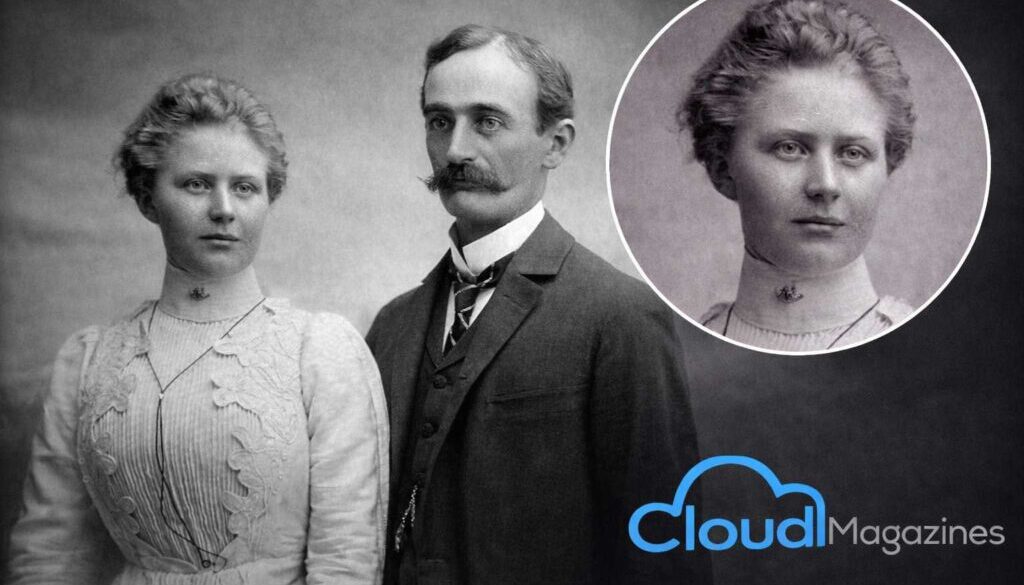
Who Was Elizabeth Christ Trump? All About The Life Of Donald Trump’s Grandmother
Elizabeth Christ Trump is one of the most important yet least talked about figures in American business history. She was the matriarch of the Trump family and a driven businesswoman who kept a real estate empire alive during one of the hardest periods in American history. Her story is one of quiet strength, sharp instincts, and extraordinary perseverance.
Most people know the Trump name through Donald Trump, the 45th and 47th President of the United States. But the roots of that legacy go much deeper, all the way back to a small village in Germany and a woman named Elisabeth Christ, who would one day become Elizabeth Christ Trump. Her life shaped everything that came after it.
Quick Bio: Elizabeth Christ Trump
| Category | Details |
|---|---|
| Full Name | Elizabeth Christ Trump |
| Birth Name | Elisabeth Christ |
| Date of Birth | October 10, 1880 |
| Birthplace | Kallstadt, Kingdom of Bavaria (modern Germany) |
| Parents | Philipp Christ (father), Anna Maria Anthon (mother) |
| Nationality | German-American |
| Spouse | Friedrich Trump (m. 1902) |
| Children | Elizabeth (Betty) Trump, Frederick Christ Trump, John G. Trump, Henry Trump (deceased) |
| Occupation | Businesswoman, Real Estate Manager |
| Known For | Matriarch of the Trump family, early Trump real estate business leadership |
| Business Name | E. Trump / E. Trump and Son |
| Major Contribution | Managed and expanded early Trump real estate holdings after 1918 |
| Husband’s Death | March 30, 1918 (Spanish Flu pandemic) |
| Death Date | June 6, 1966 |
| Death Place | Manhasset, New York, USA |
| Burial Place | All Faiths Cemetery, Middle Village, Queens, New York |
| Legacy | Foundation builder of the Trump real estate empire |
Early Life: A Small Town Girl from Kallstadt, Germany
Elizabeth Christ was born on October 10, 1880, in Kallstadt, a quiet village in the Kingdom of Bavaria, which is now part of the Rhineland-Palatinate region of modern Germany. She was the daughter of Philipp Christ and Anna Maria Anthon, a working-class family that lived a modest but close-knit life in their community.
Her family owned a small vineyard, which gave them some income, but it was never quite enough to sustain the household comfortably. Her father, Philipp, also worked as a tinker, traveling from home to home to repair and sell pots, pans, and household utensils. It was a humble way to make ends meet, and young Elisabeth grew up watching her parents work hard every single day.
The Christ family home on Freinsheimer Strasse sat directly across the street from another well-known local family, the Trumps. An elderly widow named Katharina Trump lived there with her six children, one of whom, Friedrich, had already left Germany years earlier to seek his fortune in America. This geographical coincidence would eventually change Elisabeth’s life forever.
Growing up in Kallstadt shaped Elizabeth in ways that stayed with her throughout her life. She learned the value of hard work, the importance of family, and the necessity of adapting when life does not go as planned. These were not just lessons she learned in childhood. They were qualities she would call upon again and again in the decades ahead.
Meeting Friedrich Trump: A Courtship Across Cultures
Friedrich Trump had left Germany at just 16 years old and built a successful life in the United States. He worked first as a barber and later made significant money running restaurants and hotels during the Klondike Gold Rush era in the Pacific Northwest. By the time he returned to Germany in 1901, he was a man of means and ambition looking to settle down.
When Friedrich returned to Kallstadt, he turned his attention to Elisabeth Christ, the young woman living just across the street from where he had grown up. He was 33 years old at the time, and she was just 21. Despite the age difference, there was clearly something that drew the two of them together, a shared sense of ambition, community, and family loyalty.
Not everyone was enthusiastic about the match. Friedrich’s mother, Katharina, reportedly felt that her successful son could find a bride from a wealthier or more socially prominent family. She believed Elisabeth’s background was too humble for someone of Friedrich’s standing. But Friedrich was determined, and Elisabeth accepted his proposal without hesitation.
The two were married on August 26, 1902, in Ludwigshafen, Germany. It was the beginning of a partnership that would outlast Friedrich himself and go on to define the Trump family’s future in America. Elisabeth Christ became Elisabeth Trump, and the two set out to build a life together in the United States.
Starting Over in America: A New Life in New York
After their wedding, Friedrich and Elisabeth made their way to New York City, where Friedrich had already established connections and a sense of how American business worked. The couple settled in an apartment in the Morrisania neighborhood of the Bronx, a predominantly German-speaking community that made the transition easier for Elisabeth.
Life in America was a significant adjustment for a young woman who had spent her entire life in a small German village. The cities were loud, crowded, and fast-moving in a way that Kallstadt never was. But Elisabeth embraced the change with the same practical mindset she had grown up with, focusing on building a stable home rather than dwelling on what she had left behind.
The couple attempted a return to Germany in 1904, hoping to settle back in their homeland. They sold their American assets and made the journey back to Kallstadt. However, Bavarian authorities had taken issue with Friedrich, suspecting that he had originally emigrated to avoid military service in the Imperial German Army. The government refused to allow the family to remain permanently.
With no option to stay in Germany, Friedrich and Elisabeth returned to New York in 1905. It was during this time that their son Frederick Christ Trump was born. The family eventually settled in Queens, and Friedrich began turning his attention seriously toward real estate development, a business that would define the Trump family name for generations to come.
Family Life: Building a Home in Queens
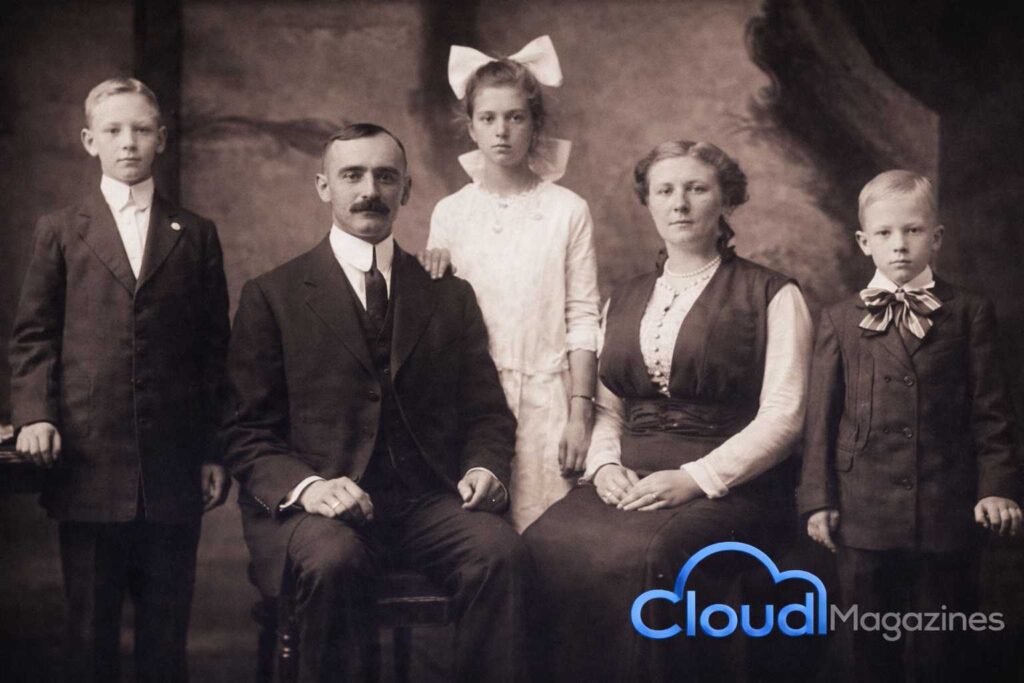
Elizabeth and Friedrich built their family life in the borough of Queens, which at the turn of the twentieth century was a rapidly growing area full of opportunity for real estate developers. Friedrich had a sharp eye for land, and he began purchasing lots with the intention of developing them into homes and income-generating properties.
The Trumps had five children in total, though tragedy struck the family early. One of their sons, Henry, died in infancy, a loss that weighed heavily on the family. The children who survived into adulthood were daughter Elizabeth, known as Betty, and two sons: Frederick Christ Trump, born in 1905, and John G. Trump, born in 1907.
John would go on to become a distinguished professor and engineer at the Massachusetts Institute of Technology, making significant contributions to science and technology over the course of his career. Frederick would follow a completely different path, choosing to stay close to home and dedicate himself to the family real estate business.
Life in Queens was stable and family-centered. Elizabeth was known to be a devoted mother and a deeply practical woman. She managed the household, raised the children, and maintained close ties to the German-American community around her. Her life, for a time, followed the expected rhythms of a working-class immigrant wife and mother in early twentieth-century New York.
Tragedy Strikes: The Death of Friedrich Trump
Everything changed in 1918. The Spanish influenza pandemic swept across the world that year, claiming tens of millions of lives in one of the deadliest public health crises in recorded history. Friedrich Trump was one of those victims. He died on March 30, 1918, at just 49 years old, leaving behind a wife, three children, and a modest but real estate portfolio.
At the time of his death, Friedrich’s estate was valued at approximately 31,000 dollars, which included their home and various real estate holdings. In today’s terms, that would be worth several hundred thousand dollars. It was not a fortune, but it was enough to provide a foundation, if managed carefully and intelligently.
Elizabeth was 37 years old when her husband died. Her youngest children were still in their early teens. She had no business degree, no formal training in real estate law or development, and no powerful connections to help her navigate the world of property and finance in New York City. What she did have was determination, common sense, and a deep desire to protect what her family had built.
The death of Friedrich Trump could have ended the family’s business ambitions entirely. Instead, it marked the beginning of Elizabeth Christ Trump’s most significant chapter. She chose not to sell the properties or walk away. She chose to fight, to manage, and to grow, doing so in an era when women in business were rarely taken seriously.
The Businesswoman: Running E. Trump and Son
After Friedrich’s death, Elizabeth stepped into the role of head of the family business. Because her son Frederick was not yet old enough to legally sign contracts or execute real estate transactions, Elizabeth handled all the legal paperwork herself. She oversaw property closings, managed finances, and made the critical decisions that kept the business from falling apart during a vulnerable and uncertain time.
She began operating the business under the name “E. Trump,” a deliberately ungendered name that allowed her to conduct business without immediately announcing that a woman was in charge. This was a practical strategy in an era when female entrepreneurs were not always welcomed or respected in professional settings. It reflected her sharp awareness of the world around her.
In 1924, she formally shifted the company name to “E. Trump and Son,” bringing young Frederick into the fold as he came of age. The business they built together was focused and strategic. While Friedrich had been interested in speculative ventures in remote areas, Elizabeth guided the company toward something more reliable: building affordable middle-class rental housing in Brooklyn and Queens.
By 1926, the company had constructed approximately 20 single-family homes in Queens alone. This was not just impressive for a woman-led business at the time. It was impressive by any standard. The firm was incorporated in 1927, and the foundation that Elizabeth and Frederick laid together would eventually grow into an empire of more than 27,000 residential units under Frederick’s later leadership.
Her Vision and Leadership Style
What set Elizabeth Christ Trump apart from many of her contemporaries was her willingness to think long-term. Rather than selling off inherited properties for immediate cash, she chose to develop them. Rather than stepping aside when times were difficult, she stepped forward. Her instincts consistently favored stability and growth over short-term convenience.
She understood that real estate was not just about buildings. It was about people, about providing housing that families could afford and rely on. Her decision to focus on middle-class rental housing was not just a smart business move. It was also a practical acknowledgment of what New York’s growing population actually needed in the years following World War One.
Frederick Trump often took center stage in later years, describing himself as the driving force behind the company’s early success. He would say in interviews that he had always dreamed of being a builder and that he completed his first house in 1924. What those accounts sometimes left out was that his mother was the one signing the checks, handling the legal documents, and making the deals possible during those critical early years.
Elizabeth was never the type to seek the spotlight. She was practical, focused, and quietly powerful. She knew what mattered and what did not. Her strength was not performative. It was structural, embedded in every decision she made and every property she managed during those foundational years of the Trump real estate business.
Elizabeth Christ Trump and the Trump Legacy
The business that Elizabeth Christ Trump nurtured from near-collapse would eventually evolve into what we know today as the Trump Organization. Her son Frederick became one of the most successful real estate developers in New York City history, building tens of thousands of homes and apartment units across Brooklyn, Queens, and beyond.
Through Frederick, Elizabeth became the paternal grandmother of Donald Trump, born on June 14, 1946. This means Elizabeth was alive for the first two decades of her famous grandson’s life. The values she instilled in her children, hard work, pragmatism, loyalty to family, and a focus on building something lasting, filtered through Frederick and into the next generation.
Donald Trump has spoken over the years about his father’s influence on his business thinking, but the foundation of that thinking was laid even earlier, by a woman who had never planned to run a real estate company but did so with extraordinary competence when life demanded it. Elizabeth’s fingerprints are on the Trump story in ways that are easy to overlook but impossible to deny.
Her son John G. Trump became a brilliant scientist and MIT professor, a path very different from his brother’s. But both sons benefited from the stable, determined home that Elizabeth maintained after Friedrich’s death. Her ability to hold the family together, financially and emotionally, created the conditions in which both of her sons could thrive.
Later Years: Still Present in the Business
Even into old age, Elizabeth Christ Trump remained connected to the family business in practical, hands-on ways. She was known to personally collect coins from the laundromat machines installed in Trump-owned buildings, a detail that says a great deal about her character. She never lost her direct, no-nonsense approach to the business, no matter how successful it became.
She was widely regarded as the matriarch of the Trump family, a term that meant something real and concrete in this case. She was not just a symbolic figurehead. She was an active presence who had shaped the direction of the business during its most formative years and continued to be involved in its operations throughout her life.
Her relationship with her son Frederick remained extraordinarily close. The two had worked side by side during the most critical years of the business, and that bond did not weaken with time or success. She was not simply Frederick’s mother. She was his earliest and most important business partner, the person who had made everything else possible.
As the decades passed and the Trump name grew more prominent in New York real estate circles, Elizabeth continued living her life with the same modesty and focus that had always defined her. She was not interested in fame or recognition. She was interested in family, in the business, and in making sure the foundation she had helped build remained solid.
Elizabeth Christ Trump Cause of Death
Elizabeth Christ Trump passed away on June 6, 1966, in Manhasset, New York. She was 85 years old. She was buried at All Faiths Cemetery in Middle Village, Queens County, New York, not far from the borough where so much of her life’s work had taken place.
Her death came just as her grandson Donald was entering adulthood, having been born in 1946. She lived long enough to see the business she had helped rescue from the edge of collapse grow into one of the most recognizable real estate operations in the entire New York metropolitan area. Her son Frederick was at the peak of his career by the time she died.
The legacy of Elizabeth Christ Trump is one that deserves far more attention than it typically receives. She was an immigrant woman in early twentieth-century America who stepped into a business leadership role during a time when that was almost unheard of. She did not just survive the challenges she faced. She built something extraordinary in spite of them.
Her story is a reminder that the history of successful families and powerful institutions is rarely just about the most famous names. Behind every visible leader, there is often someone who laid the ground beneath their feet. For the Trump family, that person was Elizabeth Christ Trump, a woman from a small German village who crossed an ocean and built a legacy that would last for generations.
Elizabeth Christ Trump Net Worth
Elizabeth Christ Trump never accumulated personal wealth in the flashy or public way that later generations of the Trump family would become known for. When her husband Friedrich died in 1918, he left behind an estate valued at approximately 31,000 dollars, which included their family home and a collection of real estate holdings in Queens and Brooklyn. That sum, modest by any measure, was the total financial foundation Elizabeth had to work with as she stepped into the role of sole decision-maker for the family business.
What Elizabeth built from that starting point is far more significant than a simple dollar figure. Through careful property development, disciplined financial management, and a strategic focus on affordable rental housing, she helped grow the family’s real estate assets substantially over the following decades. The business she co-ran with her son Frederick eventually controlled thousands of residential units across New York City. While no verified personal net worth figure exists for Elizabeth herself, the estate she helped build and preserve is estimated to have been worth several million dollars by the time of her death in 1966, a remarkable transformation from the 31,000 dollars her husband left behind.
Elizabeth Christ Trump and Donald Trump
Elizabeth Christ Trump and her grandson Donald Trump shared more of a connection than most people realize. Donald was born on June 14, 1946, and Elizabeth lived until June 6, 1966, which means she was present and active in the family’s life during the first twenty years of Donald’s childhood and early adulthood. She was not a distant historical figure to him. She was his grandmother, someone he grew up around in the very neighborhoods where the family business operated.
The values that Elizabeth demonstrated throughout her life, relentless work ethic, loyalty to family, and an instinct for real estate and business, flowed directly through her son Frederick and into Donald’s upbringing. Donald Trump has often spoken about his father’s influence on his business mindset, but the chain of influence stretches back one generation further to Elizabeth herself. She was the one who kept the business alive after Friedrich’s death, taught Frederick how to manage and grow properties, and established the family culture of building that Donald would later take to a global stage. In that very real sense, Elizabeth Christ Trump is not just Donald Trump’s grandmother. She is one of the original architects of the Trump business legacy.
Why Elizabeth Christ Trump Still Matters Today
In 2026, we are living in an era that increasingly values the stories of women who broke barriers quietly and without fanfare. Elizabeth Christ Trump is precisely that kind of figure. She did not hold press conferences or seek headlines. She simply did what needed to be done, with competence and consistency, at a time when most people would not have expected it from her.
Her story is also a deeply American story in the truest sense. She was an immigrant who arrived in a new country, faced enormous personal loss, and responded by building something meaningful. She did not do it by waiting for someone else to help her. She did it by learning, adapting, and refusing to give up on what her family had started together.
Business historians and family biography enthusiasts alike will find much to admire in Elizabeth’s approach to adversity. She demonstrates that leadership is not always loud or public. Sometimes the most powerful leaders are the ones working steadily in the background, making sure the foundation holds while others take credit for the building above it.
Understanding Elizabeth Christ Trump is essential to understanding the full story of one of America’s most recognizable family dynasties. She was not a footnote in that story. She was, in many ways, its true beginning. Her life deserves to be known, studied, and remembered as a genuine example of resilience, intelligence, and quiet, enduring strength.
Frequently Asked Questions (FAQs)
1. Who was Elizabeth Christ Trump?
Elizabeth Christ Trump was a German-born American businesswoman and matriarch of the Trump family. She played a key role in continuing and expanding the family’s real estate business after the death of her husband, Friedrich Trump.
2. Where was Elizabeth Christ Trump born?
She was born on October 10, 1880, in Kallstadt, a small village in the Kingdom of Bavaria (modern-day Germany), into a modest working-class family.
3. How did Elizabeth Christ Trump contribute to the Trump real estate business?
After her husband’s death in 1918, she took control of the family’s real estate holdings, managed legal and financial operations, and later co-ran the business as “E. Trump and Son” with her son Frederick.
4. What challenges did Elizabeth Christ Trump face in her life?
She faced several major challenges, including immigration to the United States, cultural adjustment, the loss of her husband during the 1918 influenza pandemic, and managing a business during a time when women were rarely accepted as leaders.
5. Why is Elizabeth Christ Trump considered important in American business history?
She is considered important because she preserved and strengthened the Trump family’s early real estate business, laying the foundation for what later became a major property empire spanning generations.
——————————
Other Articles:
Bob Does Sports Net Worth: All You Need To Know About Robby Berger
Hazel Vorice McCord: All About The Life of Dick Van Dyke and Jerry Van Dyke’s Mother
Constantine Yankoglu: Inside The Life of Patricia Heaton’s Ex-Husband
Isac Hallberg: All About the Life of Ludwig Hallberg and Rebecca Ferguson’s Son
Jerome Jesse Berry: All About the Life of Halle Berry’ Father